An exploration of how spatial design influences the way organizations are understood.
When organizations think about brand, the conversation usually begins with identity systems, messaging, and digital presence. Those elements matter, but they are not the only way people experience a brand.
Physical environments often shape perception more quickly and more powerfully than any piece of communication.
When someone walks into a space — whether it is a trade show environment, a corporate headquarters, a retail space, or an event installation — they immediately begin forming conclusions. Scale, lighting, materials, movement, and spatial organization all communicate meaning before a single word is spoken.
The environment tells people how to interpret what they are seeing.
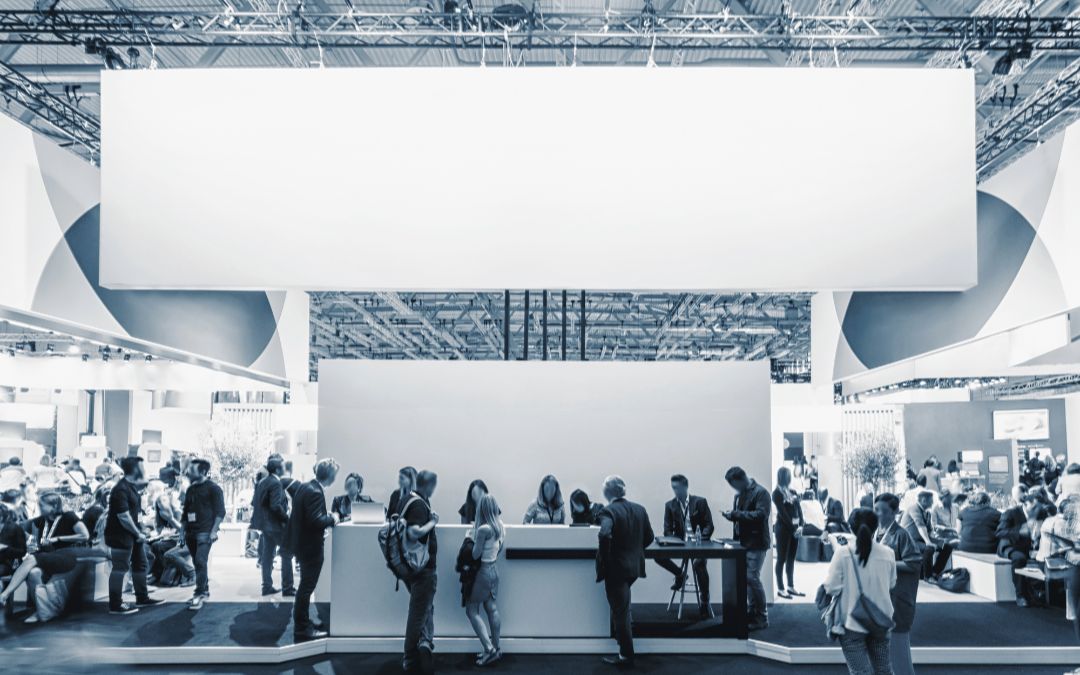
Large-scale exhibition environments make this especially visible. At major trade shows, organizations are often presenting complex products or technologies that cannot be explained in a few seconds. The role of the environment is to guide attention, clarify hierarchy, and create moments that help visitors understand what matters most.
Good environmental design does more than attract attention. It helps people understand what matters.
Space determines where people pause, where they gather, and where conversations happen. Lighting can isolate a key message or create atmosphere around a product demonstration. Materials communicate permanence, precision, or innovation depending on how they are used.
When these elements are aligned, visitors experience the brand as coherent and intentional. When they are not, the environment becomes noise.
This principle extends far beyond exhibitions. Corporate offices, customer environments, and event spaces all influence how organizations are perceived. The physical setting becomes part of the brand itself.
The best environments rarely call attention to themselves. Instead, they quietly support understanding.
Visitors leave with a clear sense of what the organization represents, even if they cannot articulate exactly how the environment shaped that impression.
That is the power of thoughtful design.
Why This Matters
Organizations often think about brand primarily through logos, messaging, and digital platforms. Yet the environments where people experience those brands—trade shows, offices, customer spaces, and public environments—can influence perception just as strongly. Thoughtful spatial design helps translate complex ideas into experiences that people can understand quickly and intuitively.
A Note on Perspective
This article reflects conversations within Larym’s creative practice led by Creative Director Steve Kelly, whose work frequently examines how design communicates complex ideas clearly to large audiences.
About Larym
Larym works with organizations whose brand and digital platforms must remain steady, usable, and well cared for as they grow and change. The firm’s work spans identity design, digital platform development, and long-term maintenance and support for organizations across multiple industries.
Author: Myra Love
Date: March 13, 2026
Author

Myra Love is a Co-founder of Larym and leads the firm’s work at the intersection of identity, intelligence, and long-term brand continuity. For more than two decades she has worked with organizations to define who they are, design how they are expressed, and ensure that brand and digital systems remain stable and meaningful as they grow and evolve.
Her writing focuses on the relationship between identity, decision-making, and the responsible use of emerging technologies.

1980 Festival Plaza Dr
Suite 300
Las Vegas, NV 89135
(702) 551-1097